
 17 Nov, 2025
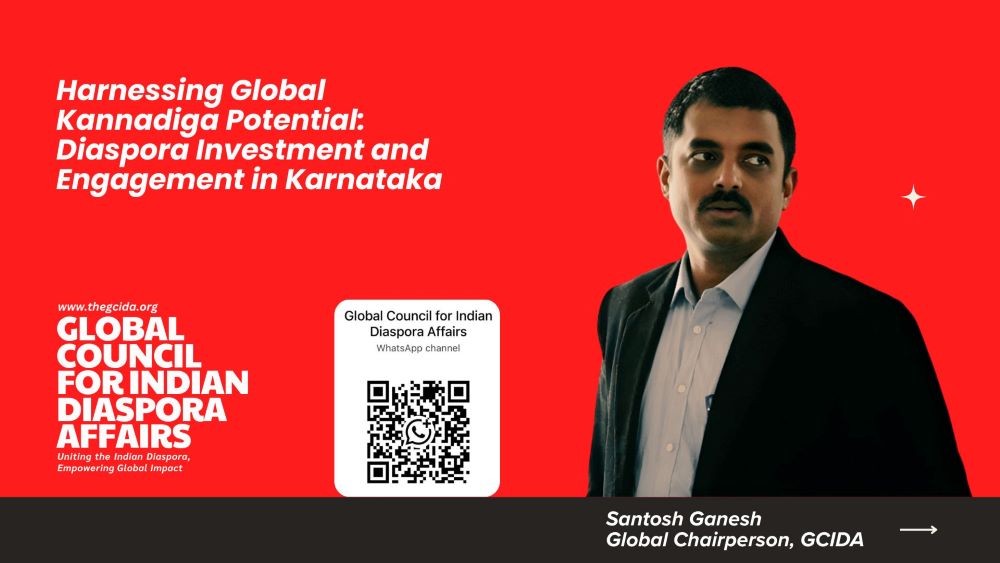
BENGALURU, KARNATAKA – A landmark new report, “Harnessing Global Kannadiga Potential: Diaspora Investment and Engagement in Karnataka,” has been unveiled today, offering an unprecedented and comprehensive analysis of the state’s strategies to engage its vibrant Non-Resident Kannadiga (NRK) community. This pivotal study meticulously examines the policies, opportunities, and challenges in attracting global capital and expertise from the Kannadiga diaspora into crucial sectors such as tourism, healthcare, and infrastructure, heralding a new chapter in Karnataka’s socio-economic development.
The report arrives at a critical juncture, as Karnataka stands poised to leverage the immense, often untapped, potential of its global sons and daughters. It moves beyond the traditional understanding of diaspora contributions, delving deep into how NRK intellectual capital, entrepreneurial spirit, and global networks can be systematically channeled to fuel innovation, growth, and a mutually prosperous future for both the state and its esteemed diaspora.
The global NRK community is far more than a source of remittances; it is a dynamic force, a reservoir of talent, and a bridge to the world. As the report underscores, while financial inflows from NRKs already constitute approximately 6% of Karnataka’s Gross Domestic Product (GDP), with an estimated $2 billion flowing from Gulf countries alone in 2022, their true value encompasses a much broader spectrum. These contributions are actively reshaping communities, funding education, transforming rural healthcare, upgrading village infrastructure, and empowering local businesses.
The Indian diaspora, as a whole, is recognized as an invaluable “soft power” tool, enhancing India’s global image and contributing significantly to economic, social, and technological advancement. For Karnataka, this translates into a unique opportunity. The report highlights the exceptional achievements of NRKs, such as those from Coastal Karnataka, who have earned the region the moniker “Doctor’s Factory” due to their global prominence in healthcare. This concentration of expertise is but one example of the specialized skills resident within the diaspora.
The Government of Karnataka has long acknowledged this potential, with foundational steps like the establishment of the Non-Resident Indian Forum, Karnataka (NRI Forum) in 2008-09. This body was conceived to forge a symbiotic relationship, acting as a nodal agency for interaction, addressing concerns, and facilitating contributions. The report meticulously charts the evolution of the state’s approach, emphasizing a growing ambition to move beyond passive financial flows towards active, strategic participation from its diaspora in Karnataka’s journey of progress.
“Harnessing Global Kannadiga Potential” provides an exhaustive review of Karnataka’s policy framework, tracing its evolution and dissecting its core components. A significant milestone in this journey was the NRI Policy of Karnataka, launched in 2017. This policy articulated a clear vision: to build sustainable linkages and play a catalytic role in creating a progressive, vibrant, and prosperous Karnataka by addressing the aspirations and expectations of the Kannadiga diaspora.
The core objectives underpinning these policies are multifaceted:
In stark contrast, the report draws a comparative perspective with Kerala’s NORKA Pravasi ID Card. Kerala’s card offers tangible benefits like personal accident insurance (up to Rs 4 Lakhs), a clear validity period, and well-defined application processes, serving as a benchmark for what a benefit-rich NRK card could achieve.
The report also details the roles of key implementing agencies, including the NRI Forum Karnataka, the Commerce and Industries Department (instrumental in the 2017 policy and operating Karnataka Udyog Mitra for investment facilitation), and proposed district-level welfare committees. The recent discussions around a dedicated ministry for NRI Kannadigas, mirroring Kerala’s model, are also analyzed, emphasizing the need for clear mandates and robust coordination to avoid administrative redundancy.
Karnataka’s tourism sector is on the cusp of a major expansion, driven by the ambitious Karnataka Tourism Policy 2024-29, approved in October 2024. This policy is a game-changer, aiming to:
To realize these ambitious goals, the policy introduces compelling incentives for NRK investors:
Karnataka’s healthcare sector presents major opportunities. Budget 2025–26 includes:
The report highlights strong NRK healthcare participation and potential for expanded PPP models, such as:
Karnataka’s massive infrastructure expansion includes:
The newly launched advanced Single Window System integrates 150+ services, featuring:
The report advocates structured utilization of NRK intellectual capital, drawing lessons from Kerala, Gujarat, and Punjab’s successful diaspora engagement models.
The report is a roadmap for building powerful partnerships between Karnataka and its global diaspora. With strategic implementation, proactive facilitation, and sustained engagement, Karnataka can unlock a new era of prosperity driven by NRK investment, innovation, and global expertise.


